THE WHITE SURI
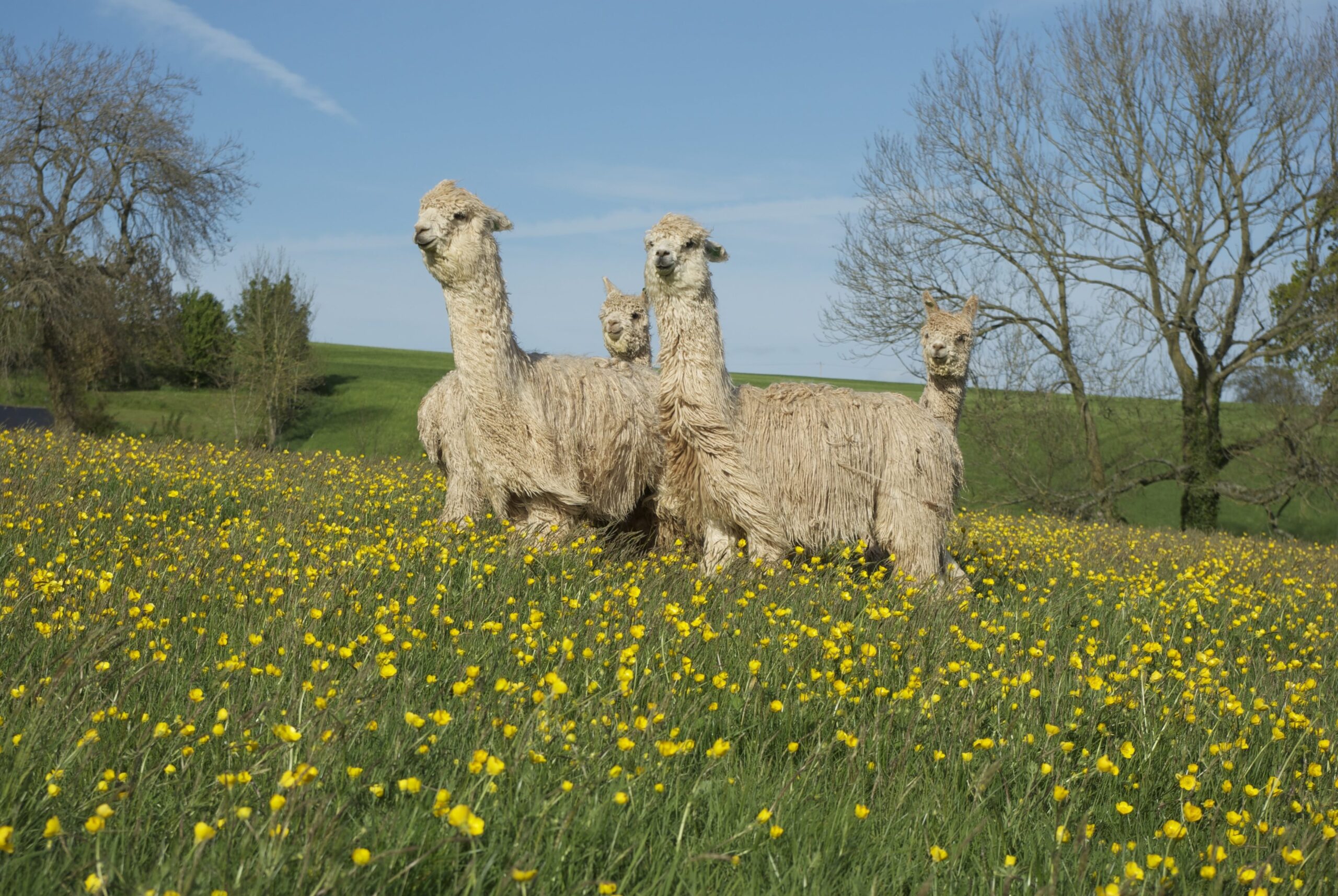
Suri Alpaca
The image of a long-necked fluff bomb commonly accompanies the word “alpaca”. That’s the Huacaya alpaca, and they make up roughly 93% of the global alpaca population of circa 3.7 million. In keeping with that proportion, most alpaca products are made from huacaya fibre.
In stark contrast, Suri alpacas like the ones in this photograph are rare, making up just 7% of the world population and a comparable proportion of the total UK alpaca population of approximately 45,000 registered animals. So around 3,000 head of suri, of which the majority are white though many suri breeders are now breeding for colours such as black and grey. The suri fibre’s structure and lack of lanolin means that it takes up dyes easily, which is one reason I first got into breeding white suris and also explains the enduring dominance of this colour.
Originating in South America, suri and huacaya alpaca are anatomically identical. Where they differ is in their fleece. The huacaya grow their fibres perpendicular to the skin with a crimp to the staples. By contrast, the suri’s fibre hangs in gloriously long pencil locks (sometimes described as ‘curtains of silk‘) which are crimp free, and significantly more lustrous than the huacaya’s. In fact, a good suri fleece is cool to the touch.
Coveted by the fashion industry, and typically spun worsted, suri fibre has the softness of cashmere; eye catching lustre; incredible warmth; great durability; and the ability to be processed, spun and dyed without the use of strong chemicals. What’s not to love?
With all these fine qualities, it’s easy to question why one would blend suri fibre with some wool. Well, the clue is in the cool touch. Thanks to the high lustre and the lack of crimp, suri fibre can be a bit slippery in the spinning process. By adding some wool (10% Polwarth in our case) to the suri fibre, it gains a bit of grip and elasticity, complementing the silky lustre, to enhance the resultant yarn’s memory and bounce which prevents over-draping and loss of shape in the final products.