THE WHITE SURI
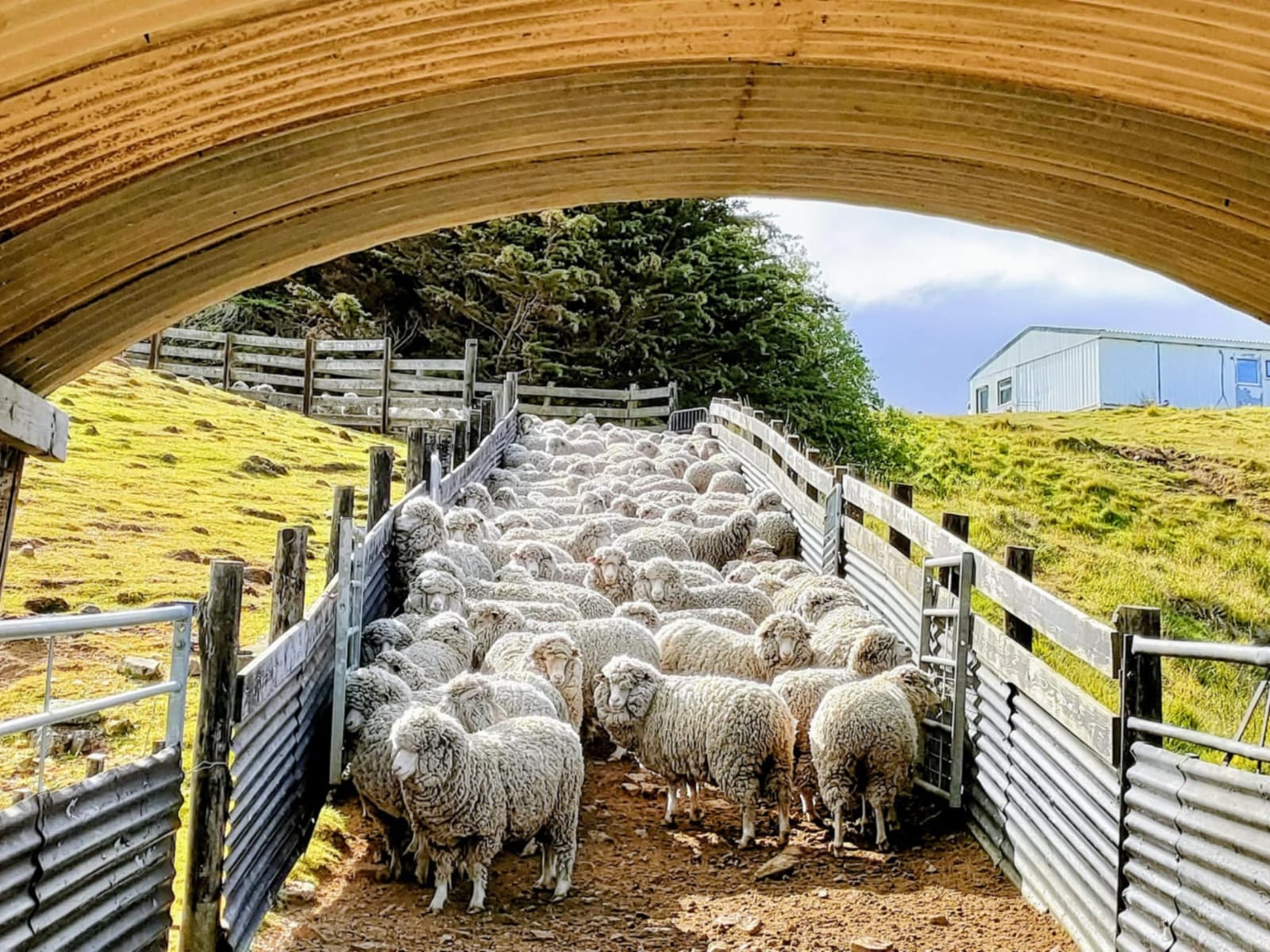
Polwarth Sheep
When first developing The White Suri, we knew that adding a touch of fine wool to the blend would complement the silky lustre of the fibre and enhance the memory and bounce of the resultant yarn, thus preventing over-draping and loss of shape in the final products. For me, Polwarth wool from the Falkland Islands matched these criteria perfectly.
Polwarth sheep originated in the western district of Polwarth in the Australian state of Victoria in the 1840s when three Cornish brothers (the Dennis brothers) began crossing fine-wooled Saxon Merino ewes with long fleeced Lincoln rams. They then bred the progeny back to pure Merino to achieve the desired genetic profile of 3/4 Merino and 1/4 Lincoln, giving a hardy dual-purpose “comeback” sheep with fine wool and substantial carcass.
Polwarth sheep were first introduced to the Falkland Islands in the 1990s, and in the years since, genetic improvement programmes have successfully reduced fibre diameter (making fleeces finer) without sacrificing fleece weight.
But there’s more than genetics at play here.
The Falkland Islands have a cool, windy, relatively dry climate atop a soil profile predominantly of shallow peat over clay. It’s this unique combination that helps make the Islands’ wools naturally “snow-white”. The climatic effect is to prevent the buildup of the bacteria that cause fleeces to yellow – without long hot spells, this simply cannot happen. And with a natural vegetation of grass-heath and no native trees or large shrubs, you don’t get the fleece contamination that we’re familiar with in the UK. The net result is exceptionally clean and bright wool, which is the perfect accompaniment to white Suri alpaca fibre.